

Quick answer
- The new regime is the default. It has lower rates but very few deductions.
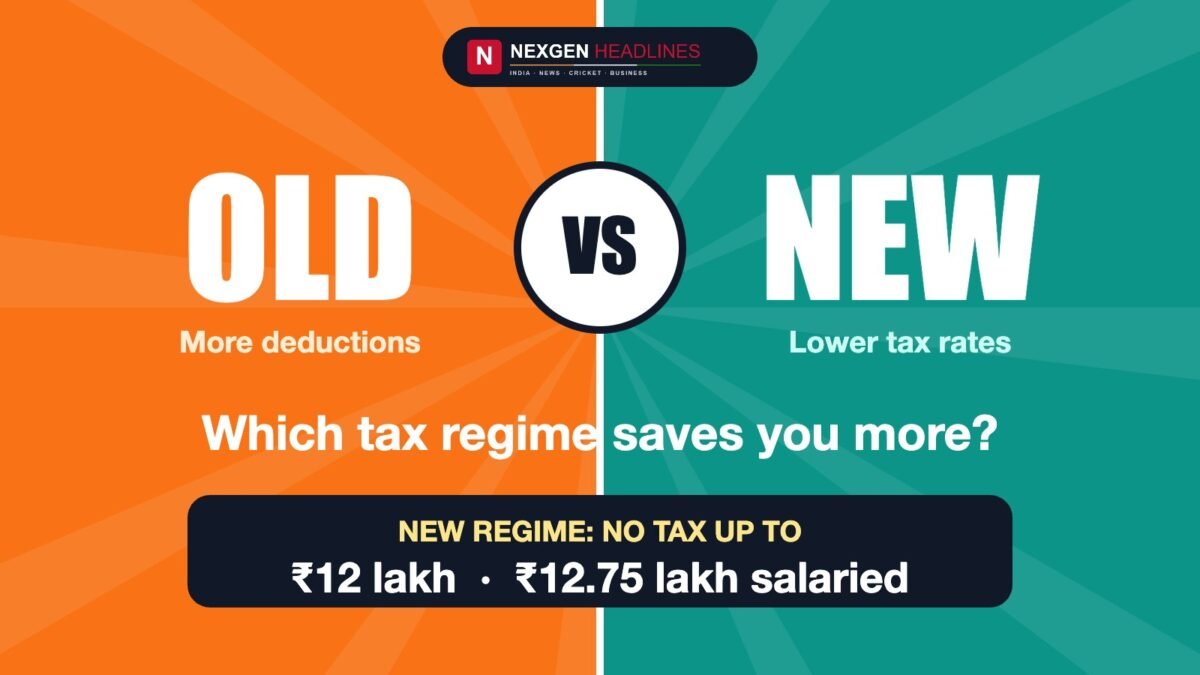
- Under the new regime there is no income tax up to ₹12 lakh of taxable income (thanks to a ₹60,000 rebate) — effectively up to ₹12.75 lakh for salaried people because of the ₹75,000 standard deduction.
- The old regime can still be better if you claim large deductions (such as HRA, home-loan interest, 80C investments).
- Run both numbers before you choose — the right answer depends on your own deductions.
Every year, salaried people and taxpayers in India face the same question: old tax regime or new? The new regime has become much more generous, and for many people it is now the better choice. But if you claim big deductions, the old regime can still save you money. This guide shows the official slab rates side by side and a simple way to decide.
📱 Prefer a quick visual guide? Old vs new in 9 swipes: Tax Regime Web Story →
New tax regime slab rates
The new regime (section 115BAC) is the default. Rates as listed by the Income Tax Department:
| Total income | Tax rate |
|---|---|
| Up to ₹4,00,000 | Nil |
| ₹4,00,001 – ₹8,00,000 | 5% |
| ₹8,00,001 – ₹12,00,000 | 10% |
| ₹12,00,001 – ₹16,00,000 | 15% |
| ₹16,00,001 – ₹20,00,000 | 20% |
| ₹20,00,001 – ₹24,00,000 | 25% |
| Above ₹24,00,000 | 30% |
Rebate: a rebate of up to ₹60,000 under section 87A applies when taxable income is not more than ₹12 lakh — so the tax payable at or below that level is nil. Salaried taxpayers also get a ₹75,000 standard deduction, which is why government announcements say salaried income up to ₹12.75 lakh pays no tax.
Old tax regime slab rates
| Total income | Tax rate |
|---|---|
| Up to ₹2,50,000 | Nil |
| ₹2,50,001 – ₹5,00,000 | 5% |
| ₹5,00,001 – ₹10,00,000 | 20% |
| Above ₹10,00,000 | 30% |
Rebate: up to ₹12,500 when taxable income is not more than ₹5 lakh. Senior and super senior citizens have higher basic exemption limits under the old regime — check the official tables for your age group.
In both regimes, a 4% Health and Education Cess is added on top of income tax (and surcharge, if any).
Side-by-side comparison
| New regime | Old regime | |
|---|---|---|
| Default? | Yes | No — you must opt in |
| Tax rates | Lower | Higher |
| No tax up to | ₹12 lakh (₹12.75 lakh salaried) | ₹5 lakh (with rebate) |
| Deductions & exemptions | Very few | Many (HRA, 80C, home loan interest, etc.) |
| Best for | Most people with few deductions | People with large deductions |
How to decide in 3 steps
- List your deductions: HRA, home-loan interest, 80C investments (PF, PPF, ELSS, life insurance), health insurance and others.
- Calculate tax both ways with the official income tax calculator on the e-Filing portal.
- Pick the lower number. If your deductions are small, the new regime usually wins. If they are large, compare carefully.
Rule of thumb
If your taxable income is ₹12 lakh or less (₹12.75 lakh for salaried), the new regime usually means zero tax — no investments needed just to save tax. Above that, the more deductions you have, the more the old regime is worth checking.
Can you switch between regimes?
Salaried individuals without business income can generally choose the regime each year while filing their return. People with business or professional income have stricter rules on switching. If you are unsure, check the official guidance on the Income Tax e-Filing portal or ask a tax professional.
Frequently asked questions
Which tax regime is better for a salary of ₹12 lakh?
Under the new regime, salaried taxable income up to ₹12.75 lakh (after the ₹75,000 standard deduction) results in nil tax because of the rebate. For most people at this level, the new regime is simpler and cheaper.
Is the new tax regime compulsory?
No. It is the default, but eligible taxpayers can opt for the old regime.
Can I claim 80C in the new regime?
The new regime allows very few deductions; most popular ones like 80C are not available. That is the trade-off for its lower rates.
Has the tax slab changed in the 2026 Budget?
According to the Finance Bill 2026, the rates for the tax year 2026-27 are unchanged from the previous year.
Is cess extra?
Yes. A 4% Health and Education Cess is charged on income tax plus surcharge in both regimes.
📱 Share with someone filing taxes: Old vs new in 9 swipes: Tax Regime Web Story →
Official links
- Income Tax e-Filing portal: Income Tax e-Filing portal
- PIB: No income tax up to ₹12 lakh under the new regime
- Related: PAN–Aadhaar link status
- Related: Check your PF balance
Rates checked against the Income Tax Department’s official help pages and Budget documents in October 2026. This is general information, not tax advice; use the official calculator or a tax professional for your situation.


5 comments