

PM-KISAN 24th Instalment Brings Major Financial Support to Farmers
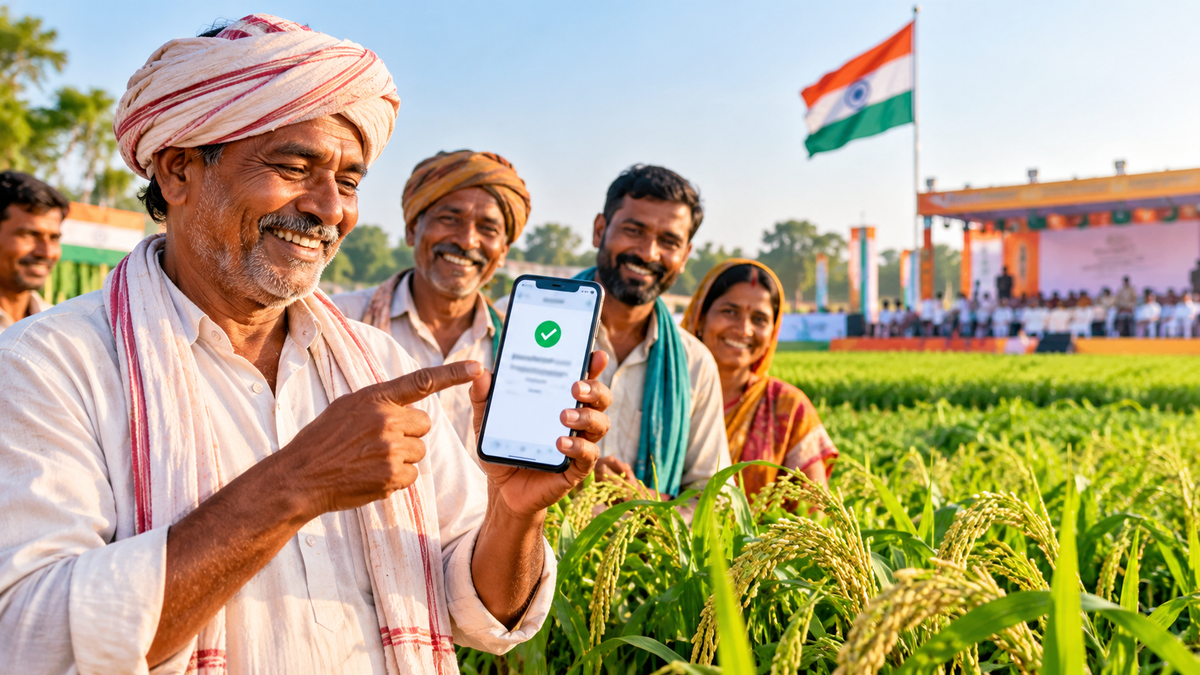
The PM-KISAN 24th instalment has brought fresh financial support to millions of farming families across India. Prime Minister Narendra Modi released more than ₹18,690 crore directly into the bank accounts of over 9.34 crore eligible farmers on October 30, 2026, during an event in Banaskantha, Gujarat.
The latest payment is an important development for India’s agricultural sector, where millions of families depend on farming for their daily income. The financial assistance is designed to help farmers manage agricultural expenses and household needs.
The announcement also came alongside a major development programme in Gujarat, with projects worth more than ₹14,000 crore launched, inaugurated or dedicated to the nation.
Over 9.34 Crore Farmers Receive Financial Assistance
One of the biggest highlights of the PM-KISAN 24th instalment is the scale of financial support reaching farming households.
According to the Ministry of Agriculture and Farmers Welfare, more than 9.34 crore eligible farmers received direct financial assistance through the latest transfer.
The government uses the Direct Benefit Transfer (DBT) system to send payments directly to beneficiaries’ bank accounts. This approach is designed to reduce intermediaries and improve transparency.
The latest transfer also takes the cumulative disbursement under the scheme beyond ₹4.64 lakh crore since its launch.
For many small and marginal farmers, this financial support can help cover important seasonal expenses.
How Much Money Do Farmers Receive?
Under the PM-KISAN scheme, eligible farmer families receive ₹6,000 annually in three instalments of ₹2,000 each.
The amount is transferred directly into their registered bank accounts.
Farmers can use this assistance for several agricultural and household expenses, including:
- Purchasing seeds and fertilizers.
- Managing irrigation expenses.
- Buying essential farming supplies.
- Supporting seasonal agricultural activities.
- Meeting certain household requirements.
The PM-KISAN 24th instalment continues the government’s effort to provide predictable financial assistance to eligible farming families.
However, the scheme is not a replacement for crop insurance, agricultural loans or other farmer welfare programmes.
Gujarat Receives Development Projects Worth Over ₹14,000 Crore
Alongside the farmer payment announcement, Gujarat witnessed another major development push.
Prime Minister Narendra Modi launched and laid the foundation stones for projects worth more than ₹14,000 crore in Banaskantha.
These projects cover several important areas, including agriculture, dairy production, transportation, infrastructure and community development.
A major highlight is the Bharat Bovine Breeding and Research Centre in Banaskantha. The facility is expected to strengthen cattle breeding, improve animal genetics and support advanced reproductive technologies.
The centre will focus particularly on the Kankrej cattle breed, which has an important place in Gujarat’s dairy and agricultural economy.
These initiatives aim to strengthen rural economic activities and improve opportunities for farmers and livestock owners.
New Infrastructure Projects Aim to Improve Connectivity
The Gujarat programme also includes important transportation developments.
Two Ahmedabad Metro extensions, Phase 2A and Phase 2B, are among the projects announced during the visit.
Phase 2A will extend metro connectivity towards Ahmedabad Airport, while Phase 2B will connect the GIFT City area with the wider metro network.
The Ahmedabad-Mehsana State Highway 41 is also set for an upgrade from four lanes to eight lanes.
In addition, two train services were flagged off:
- Ahmedabad (Sabarmati)-Varanasi Express.
- Mehsana-Becharaji-Sabarmati MEMU service.
Better transportation infrastructure can improve connectivity, support business activity and make travel more convenient for residents.
Agriculture Infrastructure Gets Additional Attention
Another important part of the programme is the development of agricultural infrastructure.
The government dedicated 521 completed projects under the Agriculture Infrastructure Fund, involving a total project cost of approximately ₹4,950 crore.
These facilities include warehouses, cold storage units, silos, greenhouses, processing facilities and cold-chain infrastructure.
Such facilities can help farmers store agricultural produce for longer periods and reduce losses caused by inadequate storage.
Better processing and transportation arrangements may also help farmers access wider markets.
The PM-KISAN 24th instalment provides direct financial support, while infrastructure investments address some of the longer-term challenges facing agriculture.
What Should Farmers Check After the Payment?
Although the PM-KISAN 24th instalment has been released, individual beneficiaries should verify whether their payments have reached their accounts.
Farmers can check their payment details through the official PM-KISAN website.
The following steps can help:
- Visit the official website at pmkisan.gov.in.
- Open the Know Your Status section.
- Enter the required registration details.
- Complete the verification process.
- Check the latest payment and beneficiary information.
Farmers should also ensure that their e-KYC information is complete.
The government has made e-KYC mandatory for registered beneficiaries. Incorrect bank details, eligibility issues or incomplete verification may affect individual payments.
Farmers should use official government services rather than sharing banking information with unknown websites or individuals.
Why This Announcement Matters for India’s Rural Economy
Agriculture remains an important part of India’s economy, providing livelihoods to millions of households.
Financial assistance can help farmers manage expenses, particularly during periods when they need to purchase seeds, fertilizers and other agricultural supplies.
The PM-KISAN 24th instalment also highlights the importance of digital payment systems in delivering government benefits.
At the same time, infrastructure investments can improve agricultural productivity and market access over the longer term.
The combination of direct financial assistance, better storage facilities, dairy development and transportation improvements could support rural economic activity.
However, the long-term impact will depend on effective project implementation, access to services and the actual needs of farming communities.
What Happens Next?
The latest announcement represents another step in the continuation of the PM-KISAN programme.
Farmers should monitor official government updates for future payment schedules, eligibility requirements and changes to scheme guidelines.
The PM-KISAN 24th instalment is particularly important because it reaches more than nine crore eligible beneficiaries through a direct payment system.
For Gujarat, the new development projects also bring attention to agriculture, dairy production and improved transportation connectivity.
The coming months will show how effectively these investments translate into better facilities, improved opportunities and stronger rural development.
Conclusion
The release of more than ₹18,690 crore through the PM-KISAN 24th instalment is significant news for India’s agricultural community.
With over 9.34 crore farmers receiving assistance, the latest transfer provides continued financial support to eligible farming families.
The development projects announced in Gujarat add another important dimension to the day’s news, covering agriculture, dairy infrastructure, roads, metro connectivity and rail services.
Together, these initiatives highlight the importance of supporting farmers while investing in the infrastructure needed for India’s long-term rural growth.
Farmers are advised to check their payment status through the official PM-KISAN portal and ensure that their e-KYC details are updated.
Official Website: https://pmkisan.gov.in/
Editorial Note: This article is based on official government announcements dated October 30, 2026. Payment amounts and beneficiary figures are based on the Ministry of Agriculture and Farmers Welfare’s published information.
THANKS FOR READING
1 comment