India Delimitation Bill 2026
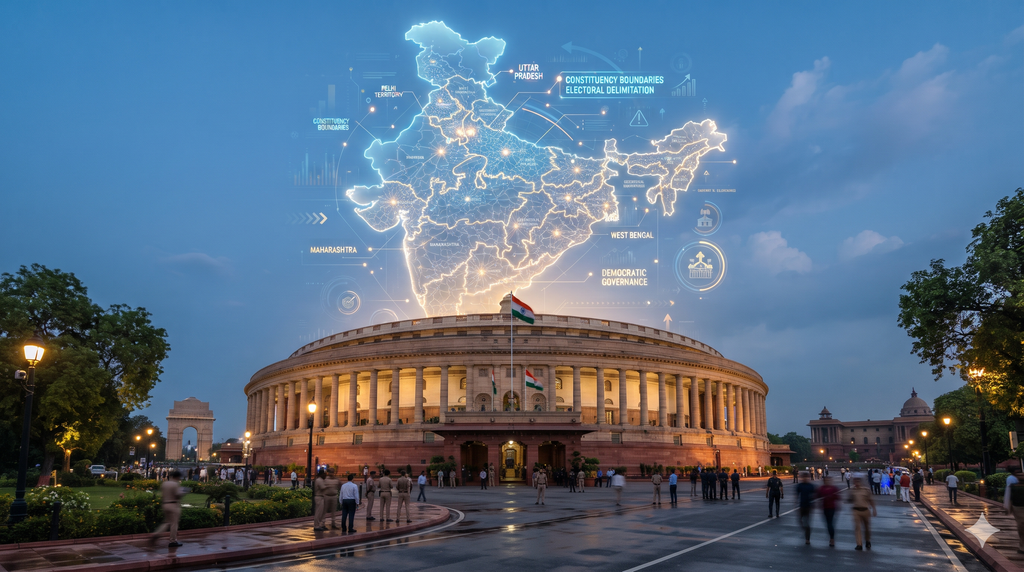
The India Delimitation Bill 2026 has officially become the defining political headline across the nation, sparking intense debate in Parliament, state capitals, and living rooms from Chennai to Chandigarh. As the Union government prepares to table the Constitution (132nd Amendment) Bill during a special sitting of the Lok Sabha, citizens are witnessing a pivotal moment that will shape representative governance for decades to come. Far more than a routine legislative exercise, the India Delimitation Bill 2026 sits at the crossroads of population fairness, federal balance, and the long-awaited implementation of women’s reservation in elected legislatures.
Understanding why this legislation matters requires looking past the daily noise of political rallies and examining what redrawing parliamentary boundaries actually means for an ordinary voter. Whether you live in a rapidly growing urban hub or a rural district with stable demographics, the India Delimitation Bill 2026 aims to recalibrate how every single vote translates into a voice inside India’s highest lawmaking body.
What Is the India Delimitation Bill 2026 All About?
At its core, delimitation is the constitutional process of fixing the limits or boundaries of territorial constituencies in a country to reflect changes in population. For decades, the number of Lok Sabha seats has remained frozen at 543, a cap originally put in place to ensure that states successfully implementing family planning programs would not be penalized with reduced parliamentary representation. However, as India’s population has crossed 1.4 billion, the gap between the number of citizens represented by a single Member of Parliament in northern states versus southern states has grown remarkably wide.
Under the proposed framework of the India Delimitation Bill 2026, the total strength of the Lok Sabha is slated to expand significantly—with discussions centered around raising the house capacity toward 850 seats. Proponents of the legislation argue that an expanding democracy requires an expanding Parliament so that representatives remain accessible to their constituents. When a single MP represents nearly three million people, grassroots accountability becomes nearly impossible. By modernizing constituency sizes, the India Delimitation Bill 2026 seeks to restore a healthier ratio between citizens and their elected leaders.
Why Political Alliances Are Divided Over the Proposal
Rarely does a single piece of legislation redraw political battle lines as dramatically as the India Delimitation Bill 2026. Ahead of the special parliamentary session, opposition leaders and regional parties have engaged in feverish behind-the-scenes diplomacy.
The Opposition’s Concerns Over Federal Balance
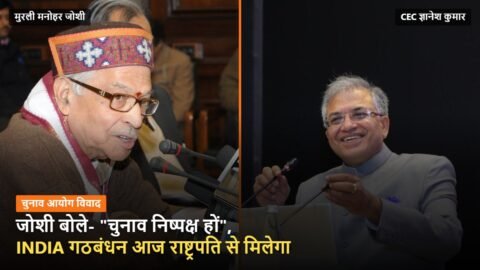
Leader of the Opposition Rahul Gandhi and several INDIA bloc allies have strongly criticized the timing and structure of the India Delimitation Bill 2026, arguing that a purely population-based formula could tilt parliamentary power heavily toward northern states while diminishing the political weight of southern states. Congress delegations have even reached out to regional allies like Tamil Nadu Chief Minister M.K. Stalin and veteran leaders such as Sharad Pawar to forge a unified front against what they describe as an unfair redrawing of the electoral map.
The Government and Regional Counter-Perspectives
On the other side of the aisle, the ruling Bharatiya Janata Party and allied leaders maintain that the India Delimitation Bill 2026 is a constitutional necessity that strengthens grassroots democracy rather than weakening federalism. Interestingly, the debate has also exposed nuanced fault lines within state politics. In Tamil Nadu, for instance, Chief Minister M.K. Stalin has firmly backed the delimitation framework while engaging in spirited exchanges with alliance partners, underscoring that state-level interests cannot be painted with a single brush.
Connecting Delimitation With Women’s Reservation
One of the most positive and transformative aspects linked to the India Delimitation Bill 2026 is its direct connection to the Women’s Reservation Act. When Parliament previously passed the historic Nari Shakti Vandan Adhiniyam to reserve one-third of all Lok Sabha and state assembly seats for women, its rollout was constitutionally tied to the completion of a fresh census and delimitation exercise.
Without moving forward on the India Delimitation Bill 2026, the promise of reserving 33 percent of parliamentary seats for women would remain stuck on paper. For millions of aspiring female leaders, panchayat representatives, and young women across India, progressing through delimitation is the essential key that unlocks genuine gender parity in national policymaking. Even though opposition parties have questioned linking women’s representation to constituency redrawing, there is broad public consensus that India cannot afford to delay women’s empowerment in Parliament any longer.
How the India Delimitation Bill 2026 Impacts Everyday Citizens
While television debates often focus on party seat tallies, the real-world impact of the India Delimitation Bill 2026 will be felt at the local level in several tangible ways:
- Better Constituency Service: Smaller, more balanced constituencies mean MPs can spend more time addressing local infrastructure, healthcare, and education needs rather than spreading resources across sprawling territories.
- Fair Urban Representation: Rapidly growing cities like Bengaluru, Hyderabad, Pune, Gurugram, and Jaipur have seen massive inward migration over the past twenty years. The India Delimitation Bill 2026 provides a mechanism to give fast-growing urban centers the parliamentary voice their tax contributions and population numbers warrant.
- Stronger Democratic Participation: When voters feel their constituency boundaries reflect actual community ties and current demographics, voter turnout and civic engagement naturally rise.
Key Challenges That Must Be Resolved Carefully
For the India Delimitation Bill 2026 to earn lasting public trust across every region of India, lawmakers must navigate a few delicate constitutional questions with wisdom and transparency:
- Protecting High-Performing States: States that successfully stabilized population growth and invested heavily in human development indicators deserve assurance that their proportional voice in national affairs will remain protected.
- Transparent Commission Guidelines: The independent Delimitation Commission tasked with drawing the new maps must operate with complete openness, holding public hearings and publishing clear criteria so no community feels gerrymandered or sidelined.
- Infrastructure Readiness: Expanding the Lok Sabha to accommodate hundreds of additional representatives—especially with a one-third women’s quota—requires thoughtful administrative planning, utilizing the expanded seating capacity of India’s new Parliament building to its full potential.
The Road Ahead for Indian Democracy
As Parliament debates the India Delimitation Bill 2026 during this pivotal winter session, the eyes of the world’s largest democracy are fixed on New Delhi. History shows that India’s democratic institutions are strongest when major structural reforms are forged through rigorous debate, mutual respect between the Centre and states, and a shared commitment to fairness.
If implemented with safeguards that honor both the principle of “one person, one vote” and the spirit of cooperative federalism, the India Delimitation Bill 2026 can stand as a landmark achievement—bringing government closer to the people, empowering women in leadership, and preparing India’s Parliament for the challenges of the next half-century.
THANKS FOR READING